
What are the Main Causes of Repeated Miscarriage?
Repeated miscarriage is a deeply emotional and physically challenging experience for couples trying to conceive. Medically known as recurrent pregnancy loss, it is typically defined as the loss of two or more consecutive pregnancies before 20 weeks. Understanding the main causes of repeated miscarriage is the first step toward finding the right treatment and improving the chances of a successful pregnancy.
In this blog, we’ll break down the causes in simple language, discuss risk factors, and guide you on when to consult a specialist.
What is a repeated miscarriage?
Repeated miscarriage refers to multiple pregnancy losses that occur consecutively. While one miscarriage is relatively common, repeated losses may indicate an underlying health issue that needs medical attention.
Main Causes of Repeated Miscarriage
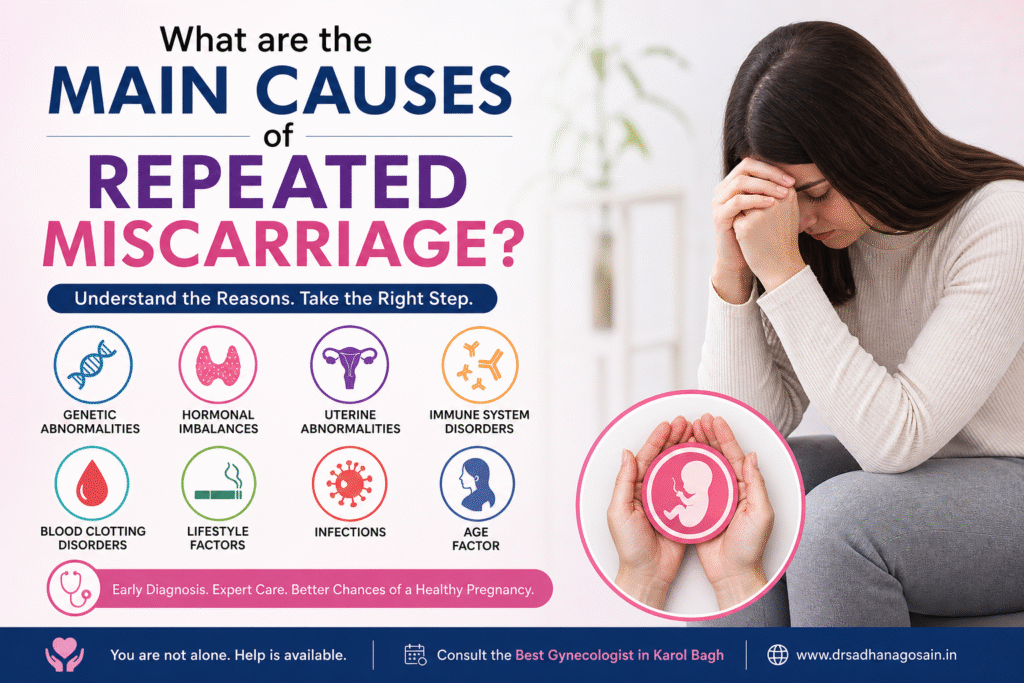
Let’s explore the most common causes:
1. Genetic or Chromosomal Abnormalities
One of the main causes of repeated miscarriage is genetic issues in the embryo.
- Sometimes, the embryo may receive an abnormal number of chromosomes.
- This leads to improper development and eventual pregnancy loss.
- In some cases, one of the parents may carry a balanced chromosomal rearrangement without symptoms.
👉 Genetic testing can help identify such issues early.
2. Hormonal Imbalance
Hormones play a critical role in maintaining pregnancy. Any imbalance can disrupt the process.
Common hormonal causes include:
- Low progesterone levels
- Thyroid disorders (hypothyroidism or hyperthyroidism)
- Polycystic Ovary Syndrome (PCOS)
If hormones are not properly regulated, the uterus may not support the pregnancy effectively.
3. Uterine Abnormalities
Structural problems in the uterus can prevent proper implantation or growth of the fetus.
Examples include:
- Uterine fibroids
- Septate uterus (a partition in the uterus)
- Scar tissue from previous surgeries
These conditions may physically interfere with the development of the pregnancy.
4. Immune System Disorders
In some cases, the body’s immune system mistakenly attacks the pregnancy.
A common condition is:
- Antiphospholipid Syndrome (APS)
This disorder causes blood clotting issues, which can reduce blood flow to the placenta and lead to miscarriage.
5. Blood Clotting Disorders
Certain inherited or acquired conditions increase the risk of abnormal blood clotting.
- These clots can block oxygen and nutrients from reaching the fetus.
- This can result in repeated pregnancy loss.
6. Lifestyle Factors
Lifestyle choices can significantly impact pregnancy outcomes.
Risk factors include:
- Smoking
- Alcohol consumption
- Excess caffeine intake
- Obesity or being underweight
- High stress levels
Making healthy lifestyle changes can improve the chances of a successful pregnancy.
7. Infections
Certain infections can increase the risk of miscarriage, such as:
- TORCH infections (Toxoplasmosis, Rubella, etc.)
- Bacterial infections of the reproductive tract
Although less common, infections should not be ignored.
8. Age Factor
Age is another important factor among the main causes of repeated miscarriage.
- Women above 35 years have a higher risk
- Egg quality declines with age
- Increased chances of chromosomal abnormalities
9. Unexplained Causes
In some cases, no clear reason is found even after testing.
- Around 40–50% of repeated miscarriages fall into this category
- However, many couples still go on to have healthy pregnancies with proper care
When Should You See a Doctor?
You should consult a specialist if:
- You’ve had 2 or more miscarriages
- You have irregular periods or hormonal issues
- You have a known medical condition like thyroid disorder or PCOS
If you’re looking for expert consultation, consider reaching out to the Best Gynecologist in Karol Bagh for proper diagnosis and personalized treatment.
View this post on Instagram
Diagnosis and Tests
Doctors may recommend the following tests:
- Blood tests (hormones, immune disorders)
- Genetic testing
- Ultrasound or hysteroscopy
- Thyroid function tests
These help identify the exact cause and guide treatment.
Treatment Options
Treatment depends on the underlying cause:
- Hormonal therapy for progesterone deficiency
- Surgery for uterine abnormalities
- Blood thinners for clotting disorders
- Lifestyle changes for better reproductive health
Early diagnosis significantly improves success rates.
Tips to Reduce Risk of Repeated Miscarriage
Here are some practical tips:
- Maintain a healthy weight
- Eat a balanced, nutrient-rich diet
- Avoid smoking and alcohol
- Manage stress through yoga or meditation
- Take prenatal vitamins (especially folic acid)
- Follow regular medical checkups
Emotional Support Matters
Repeated miscarriage is not just physical—it affects mental health too.
- Seek support from your partner and family
- Consider counseling if needed
- Join support groups to connect with others
Remember, you’re not alone in this journey.
- Also Read: What is Ectopic Pregnancy – Complete Guide
FAQs on Repeated Miscarriage
1. What are the main causes of repeated miscarriage?
The main causes include genetic abnormalities, hormonal imbalance, uterine issues, immune disorders, and lifestyle factors.
2. Can repeated miscarriage be treated?
Yes, in many cases treatment is possible once the underlying cause is identified.
3. How common is repeated miscarriage?
It affects about 1–2% of couples trying to conceive.
4. Can I have a healthy pregnancy after multiple miscarriages?
Yes, many women go on to have successful pregnancies with proper treatment and care.
5. Does stress cause miscarriage?
Severe stress may contribute, but it is usually not the sole cause.
6. When should I try to conceive again after miscarriage?
Doctors usually recommend waiting 1–3 menstrual cycles, depending on your health condition.
Conclusion
Understanding the main causes of repeated miscarriage can help couples take the right steps toward a successful pregnancy. While it can be emotionally overwhelming, medical advancements have made it possible to identify and treat many underlying issues.
If you’re facing repeated pregnancy loss, don’t delay seeking expert help. Proper diagnosis, treatment, and emotional support can make a significant difference in your journey to parenthood.
Dr. Sadhana Gosain - Expert Gynecologist in Delhi Dr. Sadhana Gosain is a highly experienced gynecologist specializing in fertility treatments, pregnancy care, childbirth, and managing complications such as PCOD, infertility, menstrual disorders, and gynecological diseases.
