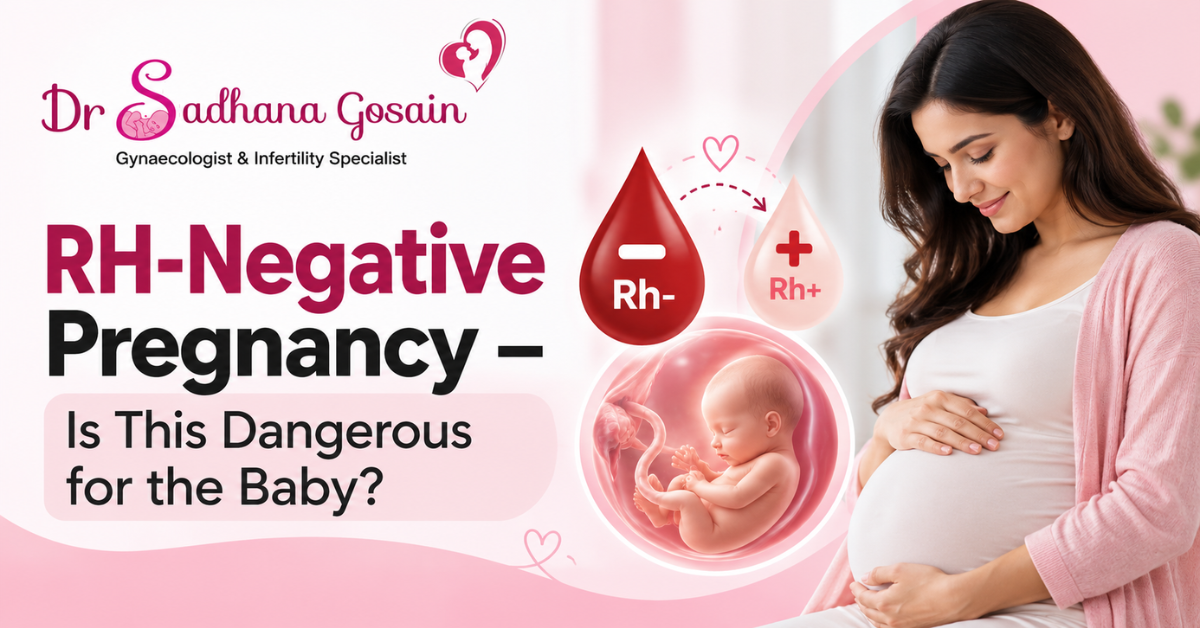
RH-Negative Pregnancy – Is This Dangerous for the Baby?
RH-Negative Pregnancy can sound worrying, especially when an expecting mother learns that her blood group is Rh-negative. The good news is that being Rh-negative does not usually mean that the pregnancy is dangerous. With timely testing, monitoring, and appropriate medical care, most women with Rh-negative blood have healthy pregnancies and babies.
The main concern occurs when an Rh-negative mother carries an Rh-positive baby. In some situations, the mother’s immune system can become sensitized to Rh-positive blood cells and produce antibodies that may affect the baby.
Understanding Rh incompatibility and receiving recommended preventive treatment can significantly reduce this risk.
What Does Rh-Negative Mean in Pregnancy?
The Rh factor is a protein found on the surface of red blood cells. If this protein is present, a person is called Rh-positive. If it is absent, the person is Rh-negative.
For example, a person may have:
- A positive (A+)
- A negative (A−)
- B positive (B+)
- B negative (B−)
- AB positive (AB+)
- AB negative (AB−)
- O positive (O+)
- O negative (O−)
Being Rh-negative is simply a blood-group characteristic. It is not a disease or illness.
However, pregnancy can require additional attention when the mother is Rh-negative and the baby may be Rh-positive.
View this post on Instagram
Is Rh-Negative Pregnancy Dangerous for the Baby?
An Rh-negative pregnancy is not automatically dangerous for the baby. The main concern is Rh incompatibility, particularly when an Rh-negative mother carries an Rh-positive baby and becomes sensitized.
If fetal blood cells enter the mother’s bloodstream, her immune system may recognize the Rh-positive cells as foreign and produce antibodies against them. These antibodies can cross the placenta in a later pregnancy and attack Rh-positive red blood cells.
This condition is called Rh alloimmunization or Rh sensitization.
The important point is that Rh sensitization can often be prevented with appropriate medical care.
What Happens if the Mother Is Rh-Negative and the Baby Is Rh-Positive?
During pregnancy, the mother’s and baby’s blood usually remain separated by the placenta. However, small amounts of fetal blood can sometimes enter the mother’s bloodstream.
This may happen during:
- Childbirth
- Miscarriage or abortion
- Vaginal bleeding during pregnancy
- Certain procedures involving the uterus
- Abdominal trauma
- Some pregnancy complications
If the baby is Rh-positive, exposure to Rh-positive blood cells may cause an Rh-negative mother to develop antibodies.
Once sensitization occurs, these antibodies can remain in the mother’s bloodstream.
What Is Rh Sensitization?
Rh sensitization occurs when an Rh-negative person’s immune system produces antibodies against Rh-positive red blood cells.
In a first pregnancy, significant problems are often less likely because sensitization may occur late in pregnancy or around delivery. However, once antibodies have developed, they can affect a future Rh-positive pregnancy.
The antibodies can cross the placenta and destroy the baby’s red blood cells. This can cause a condition known as hemolytic disease of the fetus and newborn (HDFN).
Depending on its severity, HDFN may cause:
- Fetal anemia
- Jaundice after birth
- Increased bilirubin levels
- Severe anemia
- Hydrops fetalis in serious cases
Fortunately, modern prenatal care allows doctors to identify women at risk and monitor pregnancies appropriately.
How Is RH-Negative Pregnancy Managed?
The first step is usually a blood-group test and an antibody screening test during pregnancy.
If a woman is Rh-negative, her healthcare provider may recommend additional testing and preventive treatment depending on her circumstances.
One of the most important preventive treatments is Rh immune globulin, often called anti-D immunoglobulin.
Rh immune globulin helps prevent an Rh-negative mother from developing antibodies against Rh-positive blood cells.
It may be recommended during pregnancy and after certain events where fetal blood could enter the mother’s bloodstream. It is also commonly given after delivery when the newborn is confirmed to be Rh-positive.
The exact timing and dose depend on individual circumstances, local medical guidelines, and the healthcare provider’s assessment.
Does Every Rh-Negative Mother Need an Injection?
Not necessarily in exactly the same way.
The need for Rh immune globulin depends on factors such as:
- Whether the mother is already sensitized
- The baby’s or fetus’s Rh status
- The stage of pregnancy
- Whether bleeding or another potentially sensitizing event has occurred
- Whether an invasive procedure has been performed
- Local clinical guidelines
If an antibody screen shows that the mother has already developed Rh antibodies, Rh immune globulin cannot remove those antibodies. Instead, the pregnancy may require closer monitoring.
Therefore, women should follow the treatment schedule recommended by their obstetrician or gynecologist.
Can Rh-Negative Mothers Have a Normal Pregnancy?
Yes. Most Rh-negative women can have a normal pregnancy and a healthy baby with proper prenatal care.
Being Rh-negative does not mean that a woman cannot have:
- A healthy pregnancy
- A normal delivery
- A healthy baby
- More than one pregnancy
The key is identifying Rh status early and following the recommended testing and preventive treatment.
Regular prenatal appointments are especially important because your doctor can determine whether you have developed antibodies and whether additional monitoring is required.
What Tests Are Done During RH-Negative Pregnancy?
Your doctor may recommend:
1. Blood Group Testing
This identifies your ABO blood group and whether you are Rh-positive or Rh-negative.
2. Antibody Screening
An antibody screen checks whether your blood contains antibodies that could potentially affect the pregnancy.
3. Repeat Antibody Testing
Depending on your pregnancy and medical history, your doctor may repeat testing at appropriate intervals.
4. Fetal Monitoring
If clinically significant antibodies are present, additional fetal monitoring may be recommended to assess the baby’s well-being and look for signs of anemia.
The exact monitoring plan varies from one pregnancy to another.
What Should an RH-Negative Pregnant Woman Do?
If you have an RH-Negative Pregnancy, don’t panic. Instead:
- Inform your gynecologist about your Rh status.
- Attend all scheduled prenatal appointments.
- Complete recommended antibody screening.
- Tell your doctor about any vaginal bleeding.
- Seek medical advice after abdominal trauma.
- Discuss any miscarriage, abortion, or pregnancy procedure with your doctor.
- Take Rh immune globulin when it is recommended.
- Do not skip prenatal testing.
Early identification and appropriate care are the most important steps.
When Should You Contact Your Doctor?
An Rh-negative pregnant woman should seek medical advice if she experiences:
- Vaginal bleeding
- Abdominal injury or significant trauma
- Miscarriage
- Pregnancy loss
- Abdominal pain with other concerning symptoms
- Any procedure involving the uterus
Your doctor can determine whether additional evaluation or Rh immune globulin is appropriate.
Rh-Negative Pregnancy: Key Takeaway
Is RH-Negative Pregnancy dangerous for the baby? Usually, no.
Rh-negative blood itself does not harm the baby. The concern is Rh incompatibility and maternal sensitization, which can sometimes affect an Rh-positive fetus.
The good news is that this risk can often be prevented or managed with proper prenatal care, antibody screening, Rh immune globulin when indicated, and appropriate fetal monitoring.
If you are pregnant and have Rh-negative blood, speak with your gynecologist early in pregnancy rather than worrying. With appropriate care, Rh-negative mothers can have healthy pregnancies and healthy babies.
For professional pregnancy and gynecological care, you can consult a Best Gynecologist in Karol Bagh for personalized evaluation and guidance.
Frequently Asked Questions About Rh-Negative Pregnancy
1. Is RH-Negative Pregnancy dangerous?
No. An Rh-negative pregnancy is not automatically dangerous. The main concern is Rh sensitization when an Rh-negative mother carries an Rh-positive baby. Proper prenatal testing and preventive treatment can greatly reduce the risk of complications.
2. Can an Rh-negative mother have a healthy baby?
Yes. Most Rh-negative mothers can have healthy pregnancies and healthy babies when they receive appropriate prenatal care and recommended preventive treatment.
3. What happens if the mother is Rh-negative and the father is Rh-positive?
The baby may inherit Rh-positive blood from the father. This means Rh incompatibility is possible, but it does not automatically mean that the baby will develop a problem. Your doctor can assess the risk through blood tests and pregnancy monitoring.
4. What is Rh immune globulin?
Rh immune globulin, also called anti-D immunoglobulin, is a preventive medicine used to reduce the chance of an Rh-negative mother developing antibodies against Rh-positive red blood cells.
5. Can Rh sensitization affect the baby?
Yes. If significant Rh antibodies are present, they can cross the placenta and destroy fetal red blood cells, potentially causing anemia and other complications. This is why antibody screening and appropriate monitoring are important.
6. Is Rh-negative blood a disease?
No. Being Rh-negative is a normal blood-group characteristic. It is not a disease and does not mean that a woman is unhealthy.
7. Can an Rh-negative woman have multiple pregnancies?
Yes. Rh-negative women can have multiple healthy pregnancies. Appropriate testing and preventive care are important, particularly if the fetus may be Rh-positive.
8. What should I do if I am Rh-negative and pregnant?
Inform your gynecologist, complete the recommended blood and antibody tests, attend regular prenatal appointments, and discuss whether Rh immune globulin is appropriate for your pregnancy.
9. Does Rh incompatibility affect every pregnancy?
No. Rh incompatibility does not necessarily cause complications in every pregnancy. The baby’s Rh status, maternal antibody status, previous pregnancy history, and other factors determine the level of risk.
10. When should I seek medical advice during an Rh-negative pregnancy?
Contact your healthcare provider promptly if you experience vaginal bleeding, abdominal trauma, miscarriage, pregnancy loss, or any other event that could potentially allow fetal blood to enter your bloodstream.
Dr. Sadhana Gosain - Expert Gynecologist in Delhi Dr. Sadhana Gosain is a highly experienced gynecologist specializing in fertility treatments, pregnancy care, childbirth, and managing complications such as PCOD, infertility, menstrual disorders, and gynecological diseases.
